

Choosing a motorcycle helmet shouldn't feel like a compromise between total protection and the sensory thrill of the open road. While full-face options offer maximum coverage, open face helmets provide an unmatched level of peripheral vision and airflow that many enthusiasts find essential for summer riding. It's about finding that perfect balance where style meets functional performance.
You likely appreciate the classic look of a 3/4 shell but worry about the trade-offs, such as increased wind noise or the difficulty of fitting glasses and Bluetooth units. We understand those concerns. This guide will show you how to select a high-quality model that addresses these pains while maximizing your comfort. We'll explore the latest ECE 22.06 safety standards. We'll also highlight how brands like Shoei, Arai, and HJC are innovating to keep you protected. You'll discover how to choose the right fit for your specific riding style and gear requirements.
Key Takeaways
- Learn why open face helmets are the premier choice for riders seeking maximum peripheral vision and superior airflow.
- Identify essential safety standards and explore how premium shell laminates from brands like Arai and Shoei enhance protection.
- Discover the functional benefits of integrated sun shields and face visors for managing wind, debris, and UV exposure.
- Master the integration of Sena and Cardo Bluetooth systems to maintain clear communication while on the move.
- Use precise measurement techniques to determine your head shape and ensure a secure, stable fit for every ride.
What is an Open Face Helmet? Defining the 3/4 Style
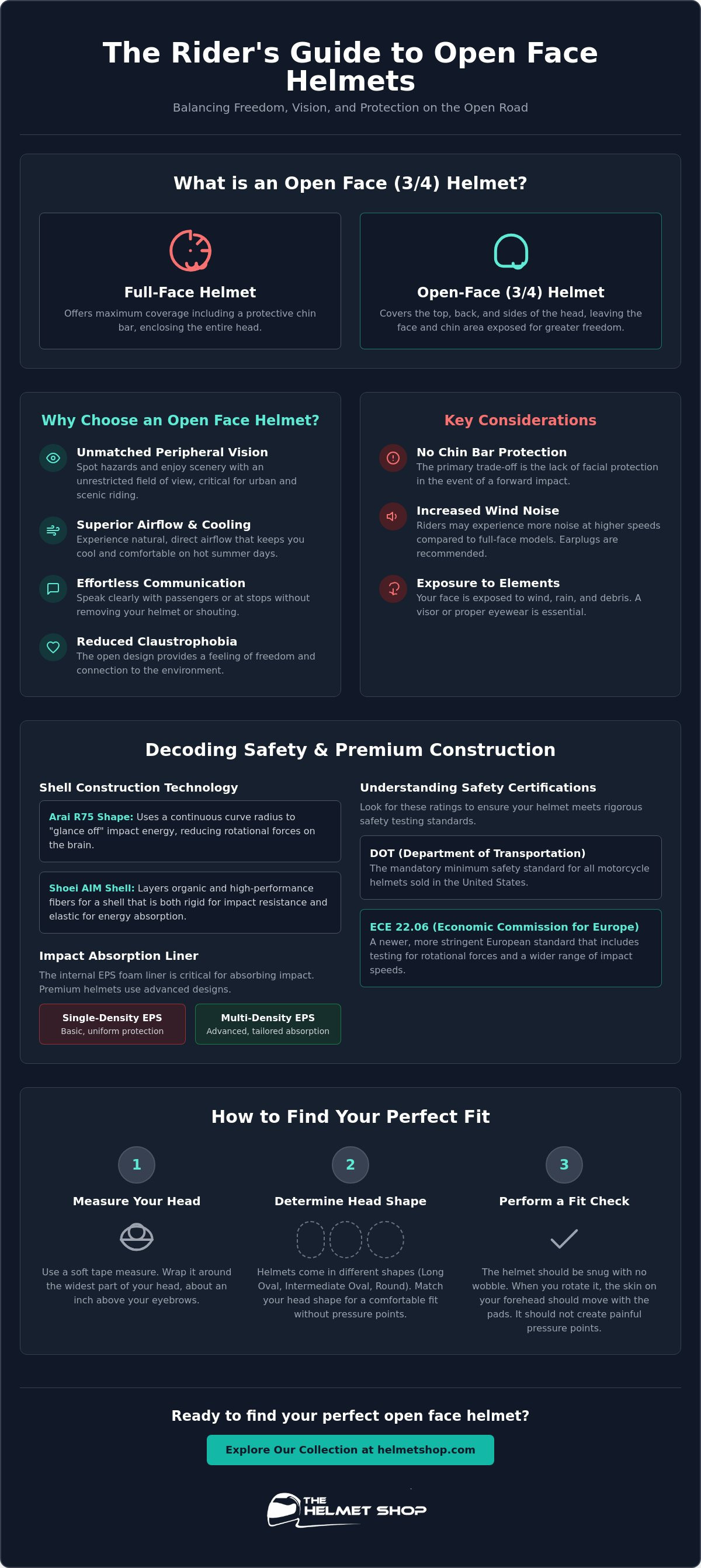
An open face helmet, commonly referred to as a 3/4 helmet, provides a distinct level of coverage that balances safety with freedom. It wraps around the top, back, and sides of your head while leaving the face exposed. This design is fundamentally different from full-face models because it lacks a permanent chin bar. To understand the structural variety of headgear, you can explore the technical definition of What is an Open Face Helmet? and how it compares to other styles. Many riders prefer this configuration because it eliminates the feeling of being closed in. If you often feel claustrophobic in traditional full-face lids, the open design offers immediate relief and a sense of connection to your surroundings.
To see how a premium model balances these features, watch this helpful review:
Open Face vs. Full Face: The Sensory Trade-off
Opting for open face helmets involves a specific sensory trade-off that many riders find beneficial. By removing the chin bar, you gain an unrestricted field of vision. This increased peripheral awareness is vital when you need to spot merging traffic or road hazards in your side view. Direct airflow is another major advantage. On hot summer rides, the natural breeze provides cooling that internal ventilation systems simply can't match. You'll also find that social interactions become much simpler. Whether you're speaking to a passenger at a stoplight or stopping for a quick coffee, the open design makes these transitions seamless. Communication is clear and unobstructed.
Who Should Choose a 3/4 Helmet?
This style remains a staple within the cruiser, scooter, and vintage motorcycle communities. The iconic silhouette matches the aesthetic of a classic bike or a modern cafe racer perfectly. Beyond the visual appeal, it serves practical needs for several types of riders. Urban commuters benefit from the wide field of view in dense city traffic. Touring riders who value the social aspect of motorcycling often prefer being able to talk without shouting through a chin bar. These helmets are also typically lighter than their full-face counterparts. This weight reduction is a key factor in minimizing neck fatigue during extended trips. If you want a lightweight feel without sacrificing shell integrity, a high-quality 3/4 helmet is an excellent choice. Brands like Shoei, Arai, and HJC offer sophisticated versions of this classic design, ensuring that style never comes at the expense of engineering.
Safety Standards and Premium Construction Materials
Safety isn't just a label. It's the foundation of every ride. Every helmet sold for road use in the United States must meet federal DOT safety standards. These regulations ensure a minimum level of impact attenuation and penetration resistance. However, premium open face helmets often exceed these baseline requirements by a significant margin. They utilize advanced engineering to provide specialized protection. For instance, reinforced side covers are a common feature in high-end models. These add extra layers of material to the temporal and ear regions. These areas are particularly vulnerable during a slide, and reinforced shells help mitigate that risk.
Inside the shell, the EPS (Expanded Polystyrene) liner does the heavy lifting during an impact. Generic helmets often use single-density foam throughout. In contrast, premium options feature multi-density EPS liners. These liners use varying foam densities to absorb high and low-speed impact energy more effectively. It creates a more sophisticated energy management system for your head. When you choose a helmet with these features, you're investing in technology designed to handle real-world crash scenarios.
Arai and Shoei: The Gold Standard in Open Face Protection
Arai and Shoei represent the pinnacle of helmet engineering. Arai focuses on the "R75" shape. This design emphasizes a continuous curve with a radius of at least 75mm. It's built to "glance off" impact energy rather than absorbing it all at once. This reduces the rotational forces transmitted to the brain. Shoei uses its AIM (Advanced Integrated Matrix) shell technology. This involves layering organic fibers and high-performance fibers. The result is a shell that is both rigid and elastic. You can read more about why this matters in our Shoei Helmets pillar. Their J-Cruise series is a prime example of this technology. It provides elite protection without the bulk of traditional designs.
Understanding Shell Materials: Polycarbonate vs. Composite
The material of the outer shell dictates both the price and the performance. Polycarbonate shells are common in entry-level HJC models. They are cost-effective and durable. They serve as an excellent choice for casual riding or shorter commutes. If you want higher performance, look at fiberglass or carbon fiber composites. These materials offer superior strength-to-weight ratios. Weight is a critical factor for comfort. A lighter helmet significantly reduces strain on your neck and shoulders during long-distance rides. It keeps you alert and comfortable for longer periods. When you're ready to upgrade your gear, you can browse our curated selection of industry-leading brands to find your perfect fit.
Key Features for Maximum Comfort and Utility
Modern open face helmets integrate specialized features to enhance the riding experience. Beyond simple head protection, these designs focus on environmental management. Face shields and visors act as your primary defense against high-speed wind, road debris, and harmful UV rays. High-quality shields provide a barrier that prevents eye fatigue during long hours in the saddle. You'll find that a well-designed visor significantly improves your focus by reducing the physical impact of the elements.
Integrated sun shields are a game-changer for daily utility. These secondary internal visors allow for "on-the-fly" eye protection. You can deploy or retract them with a simple slide mechanism. This feature is invaluable when riding through tunnels or as the sun sets. It eliminates the need to stop and swap glasses or shields mid-ride. It's a practical solution for riders who face changing light conditions throughout the day.
Thermal regulation is equally important for long-term comfort. Advanced ventilation systems use strategically placed top vents to pull fresh air into the helmet. Meanwhile, rear exhaust ports create a vacuum effect to draw hot, humid air out. This constant exchange keeps your head cool during peak summer heat. Maintaining a stable internal temperature reduces sweat and prevents the "hot spots" that often lead to rider distraction.
Longevity depends on hygiene and maintenance. Removable liners made from washable, moisture-wicking materials allow you to keep your gear fresh. These liners prevent the buildup of odors and bacteria, ensuring your helmet remains comfortable for years. High-quality interior materials don't just feel better against the skin; they also maintain their shape and cushioning properties after multiple washes.
Shield Systems and Optical Clarity
Optical clarity is non-negotiable for safe riding. Look for Pinlock-ready shields. These dual-pane systems effectively prevent fogging during cold morning commutes or humid rain showers. Distortion-free optics ensure your vision remains sharp at high speeds. This is critical for identifying road hazards early. Quick-release mechanisms further improve utility. They allow you to swap between clear and tinted shields in seconds without using any tools. This flexibility ensures you always have the best visibility for current conditions.
Interior Fit and Moisture Management
Interior fit determines how well open face helmets perform at speed. Fabrics like COOLMAX pull sweat away from your skin to facilitate rapid evaporation. This moisture management keeps you dry and focused. Contoured cheek pads are essential for stability. They ensure a snug fit that prevents "helmet lift" when you're traveling at highway speeds. Many premium models also offer adjustable interior components. These allow you to fine-tune the fit for different head shapes, providing a semi-custom feel that enhances overall comfort and security.
Integrating Technology and Riding Gear
Modern riding isn't just about the helmet; it's about the entire ecosystem of gear you bring on the road. While open face helmets offer a superior sense of freedom, they present unique challenges for communication and weather protection. Staying connected requires a thoughtful approach to technology integration. Unlike full-face models, the lack of a chin bar means you must account for increased wind interference when choosing electronics. Every piece of your kit should work together to maintain a quiet, functional environment.
Microphone placement is the most critical factor for clear audio. In an open cockpit, a standard button microphone won't work effectively. You need a "boom mic." This rigid, adjustable arm allows you to position the microphone directly in front of your mouth. Premium headsets use advanced noise-canceling algorithms to filter out ambient wind noise. This ensures your voice remains audible even at highway speeds. It's a practical necessity for anyone who needs to take calls or use voice commands without fighting the rush of air.
Sena vs. Cardo for Open Face Riders
Choosing between the industry leaders depends on your specific needs. Sena systems are widely recognized for their slim, aerodynamic profiles. They integrate seamlessly with many HJC and Shoei models, often fitting into pre-molded pockets within the shell to reduce drag. If you frequently ride in large groups, Cardo Packtalk units are a robust alternative. They utilize Dynamic Mesh Communication (DMC) to keep groups connected over long distances without the "daisy-chain" limitations of traditional Bluetooth. For a deeper look at these technologies, check out our Bluetooth Headsets guide to find the right system for your setup.
Completing the Look with Protective Apparel
Your helmet should work in tandem with your clothing to maximize comfort. Pairing your 3/4 shell with a Tourmaster touring jacket creates a versatile, weather-ready kit. These jackets often feature high collars. This design choice is vital for reducing wind buffeting that can occur at the base of an open face helmet. It keeps the air from rushing up into the shell, which significantly lowers fatigue. Additionally, Cortech gear like reinforced gloves provide the necessary grip and tactile feedback to operate small Bluetooth buttons on your headset without looking away from the road.
Eye protection synergy is another key consideration for the open-face rider. Many open face helmets feature internal channels in the cheek pads to accommodate the arms of sunglasses or prescription eyewear. This prevents painful pressure points during long rides. If you prefer a vintage aesthetic, pairing your helmet with goggles provides a secure seal against dust and debris. When you're ready to build your complete riding kit, you can shop our full range of communication systems and apparel to ensure every piece of gear works together perfectly.
How to Choose and Fit Your Open Face Helmet
A helmet only protects you effectively if it stays securely in place during an impact. Finding the right size for open face helmets begins with an accurate measurement. Use a flexible cloth tape measure. Wrap it around the widest part of your head, approximately one inch above your eyebrows and just above your ears. This measurement in centimeters or inches serves as your baseline for manufacturer size charts. Don't guess your size based on a previous brand. Every manufacturer uses slightly different internal dimensions.
Identifying your head shape is the next critical step. Most riders fall into one of three categories: round oval, intermediate oval, or long oval. Round oval shells are wider from side to side. Intermediate oval shapes, which are the most common in North America, are slightly longer front to back than side to side. Long oval shells are significantly longer from the forehead to the back of the skull. If you choose a shape that doesn't match your head, you'll experience uncomfortable pressure points or excessive movement.
Perform the "Snug Test" once you have the helmet on. Grasp the helmet firmly by the sides and try to rotate it. Your skin and cheeks should move with the interior liner. If the helmet slides easily over your skin, it's too large. Check for "hot spots" by wearing the helmet for at least 15 minutes. A properly fitted helmet should feel like a firm, consistent hug around your entire head. It should never cause a headache or sharp pain in specific areas.
The Proper Fitment Process
The crown of the helmet must sit level on your head without tilting too far forward or back. It should rest just above your eyebrows to ensure your field of vision remains clear. Secure the chin strap so that it's tight but comfortable. A good rule of thumb is that only two fingers should fit between the strap and your neck. This prevents the helmet from lifting off in the event of a slide. For a detailed walkthrough on sizing, refer to our Motorcycle Helmet Fit Guide.
Final Checklist Before You Ride
Before you take your new gear on the road, verify a few final details. Ensure the DOT sticker is present and permanently applied to the rear of the shell. Test the shield mechanism by moving it through its full range of motion. It should stay in place at various heights without slipping. Finally, check your ear comfort. The interior padding or Bluetooth speakers should not pinch or fold your ears. If everything feels secure and comfortable, you're ready for the road. You can explore our current inventory to find a model that fits your specific measurements and style preferences.
Find Your Perfect Balance of Style and Safety
Selecting the right headgear is a personal decision that impacts every mile of your journey. You now understand how shell materials, fitment standards, and integrated technology come together to create a superior riding experience. Whether you prioritize the wide peripheral vision of 3/4 shells or the cooling airflow of a summer ride, the right choice is out there. A properly fitted helmet isn't just about comfort; it's about ensuring your safety remains the top priority on every trip.
We've been providing expert riding gear advice since 1995. As an authorized dealer for industry leaders like Shoei, Arai, and HJC, we ensure you receive only the highest standard of protection. Our team carefully selects every item to meet the specific needs of modern enthusiasts. When you're ready to upgrade, you can Browse our curated selection of premium Open Face Helmets. We offer fast national shipping on all premium lids to get you back on the road quickly. Ride with confidence knowing your gear is backed by decades of industry expertise.
Frequently Asked Questions
Are open face helmets safe for highway riding?
Open face helmets are safe for highway use as long as they meet DOT or ECE 22.06 certification standards. These ratings ensure the shell and liner can handle high-speed impacts. While they don't offer chin protection, premium models provide excellent coverage for the top, back, and sides of your head. You should pair them with a face shield to protect against wind and road debris at higher speeds.
Can I install a Bluetooth headset in an open face helmet?
Yes, you can install communication systems like Sena or Cardo in most modern 3/4 designs. Many manufacturers include dedicated speaker pockets in the interior padding to make installation seamless. It is essential to use a boom microphone rather than a button mic. This allows you to position the microphone directly in front of your mouth to minimize wind interference during your ride.
What is the difference between a 3/4 helmet and a half helmet?
The primary difference lies in the amount of head coverage provided. A 3/4 helmet, also known as an open face design, covers the crown, the back of the skull, and the ears. A half helmet only covers the top of the head, leaving the ears and the base of the skull exposed. Because open face helmets cover more surface area, they generally offer better impact protection and stability.
Do open face helmets come with visors?
Many models feature integrated flip-up face shields or come with snap-on visors for sun protection. Some premium versions also include internal, drop-down sun shields that you can operate with a side lever. These features are designed to protect your eyes from UV rays and wind. If your specific model doesn't include a shield, you can often find aftermarket options that snap onto the front of the shell.
How do I stop wind noise in an open face helmet?
Reducing wind noise starts with ensuring a perfectly snug fit around your ears and temples. Air rushing into gaps in the padding is the primary cause of whistling or roaring sounds. You can also use a tall motorcycle windshield or wear a high-collar jacket to deflect air away from the base of the helmet. Many experienced riders also use high-quality earplugs to protect their hearing during long trips.
Are open face helmets legal in all US states?
Open face helmets are legal for on-road use in every state as long as they carry a permanent DOT sticker. While every state has different laws regarding who must wear a helmet, the 3/4 style is a recognized and legal safety standard across the country. Always ensure your gear is properly certified to avoid legal issues and to ensure you have a baseline level of protection during an accident.
How often should I replace my open face helmet?
You should replace your helmet every three to five years or immediately after any impact. Even if the shell looks fine, the internal EPS liner can degrade over time due to UV exposure, sweat, and hair oils. Most manufacturers recommend a five-year limit from the date of purchase to ensure the materials still perform as intended. If you drop your helmet on a hard surface, the internal structure may be compromised.
Can I wear glasses with an open face helmet?
Yes, most open face helmets are specifically designed with interior channels to accommodate the arms of glasses or sunglasses. These grooves prevent the frames from pressing into your temples, which helps avoid headaches during long rides. When shopping for a new lid, it is a good idea to bring your riding glasses with you. This ensures the padding doesn't interfere with the fit or alignment of your eyewear.


