

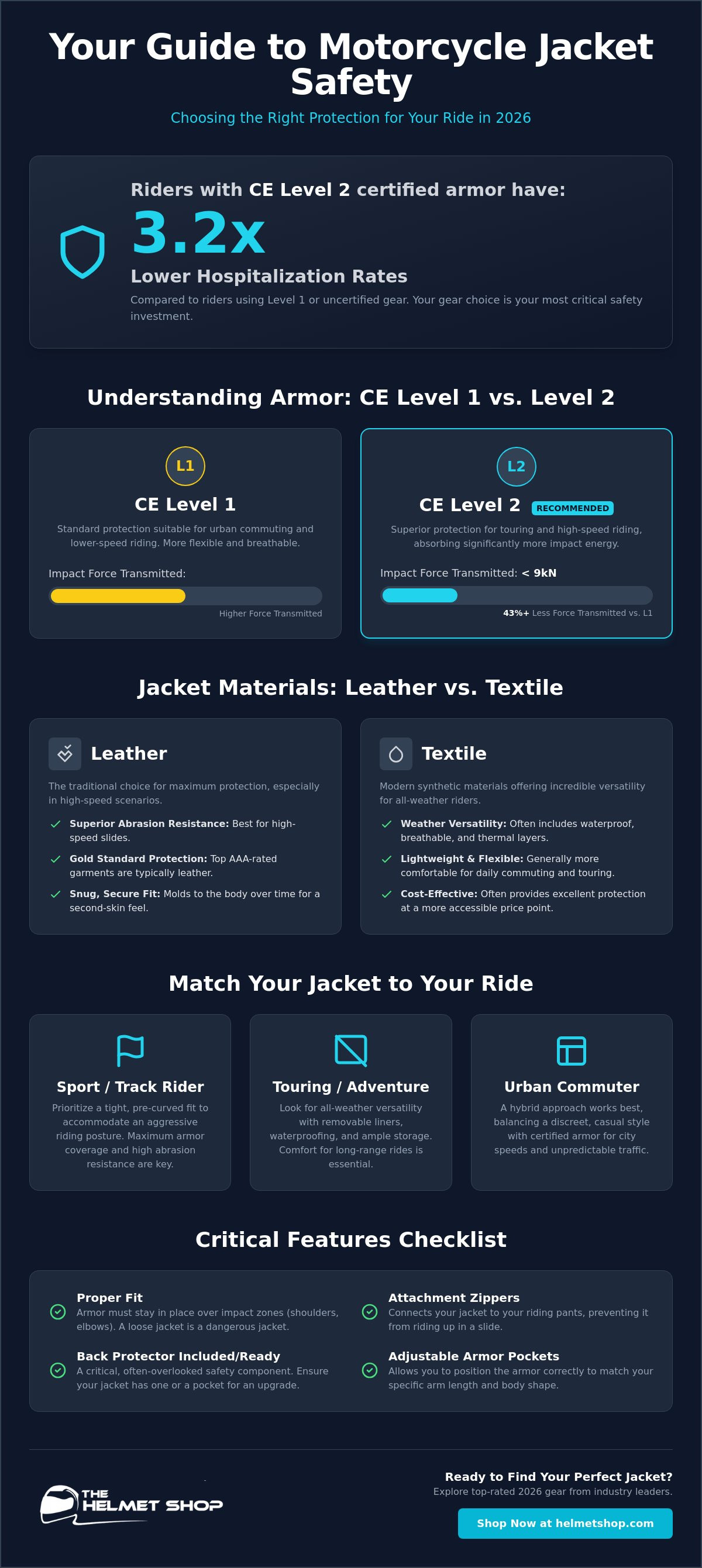
Riders wearing CE Level 2 certified gear have 3.2 times lower hospitalization rates compared to those using Level 1 or uncertified armor, according to crash data analyzed through February 2026. This stark reality means your choice of motorcycle jackets is the most important safety investment you'll make this year. It's common to feel confused by technical labels or worry about spending money on a jacket that feels like a sauna in July and leaks the moment it rains.
You need gear that matches your specific riding posture and provides genuine, tested protection. We'll show you how to select the perfect jacket by balancing CE-rated armor, abrasion resistance, and weather versatility for your riding style. This guide provides a clear breakdown of safety ratings and compares leather versus textile options to help you build a versatile, protective kit. You'll gain the confidence to choose a jacket that offers professional-grade safety without sacrificing comfort or fit.
Key Takeaways
- Learn why specialized motorcycle jackets are essential safety tools and how standard denim or leather fails to protect you in a high-speed slide.
- Break down the technical differences between CE Level 1 and Level 2 armor to ensure your impact zones are properly shielded.
- Find out how to stay comfortable in any climate using mesh materials, waterproof layers, and heated options for year-round riding.
- Identify the critical functional features, such as attachment zippers, that prevent your gear from shifting during an impact.
- Gain access to a curated list of top-rated 2026 gear from industry leaders like Tourmaster and Cortech.
Choosing the Right Motorcycle Jacket for Your Riding Style
A motorcycle jacket is more than apparel; it's a technical safety tool designed to manage extreme forces. While a standard denim or fashion leather jacket might look the part, these materials often fail within milliseconds of contacting asphalt at speed. High-performance motorcycle jackets are engineered to provide a specific balance of abrasion resistance and impact absorption. They act as a sacrificial layer, protecting your skin from friction burns and your joints from blunt force trauma. This gear is a foundational component of motorcycle personal protective equipment, serving as your primary defense on the road.
To better understand how to select and size your gear, watch this helpful video:
Think of your gear as a second skin. It must move with you while maintaining its position during an accident. If a jacket is too loose, the internal armor can shift away from your elbows or shoulders right when you need it most. Whether you're navigating city traffic or leaning into a track corner, the fit must be secure without restricting your range of motion. Choosing the right motorcycle jackets requires you to identify your primary riding environment, as a track-focused suit and a city commuter jacket serve very different purposes.
Leather vs. Textile: The Great Debate
Leather remains the traditional choice for high-speed sport riding due to its superior natural abrasion resistance. Most professional racers rely on leather because it can withstand prolonged slides better than almost any other material. Look for AAA rated garments, which represent the gold standard for road protection. However, modern textile jackets offer incredible versatility. These synthetic materials are often lighter, more breathable, and easier to waterproof. They provide an excellent solution for riders who face changing weather conditions or need more flexibility for daily commuting.
Matching Your Jacket to Your Ride
Your riding style dictates the features you need. Touring riders should prioritize long-range comfort, seeking out jackets with multi-season liners and ample storage for essentials. Sport riders need a more aggressive, pre-curved fit that accommodates a tucked riding posture and maximizes armor coverage. For a complete look at how to build your full kit, consult our Motorcycle Gear Guide. Urban commuters often benefit from a hybrid approach, choosing gear that offers a discreet look while still providing the necessary safety ratings for city speeds.
Understanding Armor and Safety Ratings: CE Level 1 vs. Level 2
Selecting the right motorcycle jackets requires an understanding of how armor manages energy during an impact. While the outer shell handles abrasion, the internal armor is responsible for absorbing the kinetic energy that would otherwise reach your bones and organs. Modern impact protection is categorized by "CE" ratings, a European standard that has become the global benchmark for safety. Choosing between Level 1 and Level 2 armor isn't just a matter of comfort; it's a decision that directly impacts your recovery potential after an accident.
The primary impact zones in any high-quality jacket are the shoulders and elbows. However, the back protector is a critical component that many riders overlook, often because it's sold as an optional insert. Ensuring your gear covers these areas is vital, as according to NHTSA motorcycle safety guidelines, proper protective equipment is the most effective way to reduce injury severity. When shopping, you must distinguish between "armor ready" jackets, which only feature internal pockets, and "armor included" models that come fully equipped from the factory. Proper armor placement is also essential. Look for jackets with adjustable pockets that allow you to move the elbow protectors to match your specific arm length.
What is CE Level 2 Protection?
CE Level 2 armor is defined as protection that transmits less than 9kN of force to the body during testing. This rating is the preferred choice for touring and high-impact scenarios because it can reduce transmitted impact forces by over 43% compared to Level 1 armor. Because riders wearing Level 2 gear have significantly lower hospitalization rates, The Helmet Shop prioritizes CE Level 2 inserts for riders who demand maximum security. You can find a wide range of high-performance options when you browse our collection of armored jackets.
Abrasion Resistance and AAA Ratings
Beyond impact, you must consider how well a jacket survives a slide. The European EN 17092 standard ranks garments from C to AAA based on their abrasion resistance. A-rated jackets are suitable for low-speed urban use, while AA is the standard for general touring. AAA rated jackets represent the pinnacle of safety, designed specifically for track use and high-speed highway riding. Manufacturers achieve these ratings by using heavy-duty materials like premium cowhide or high-denier Cordura textiles, often reinforcing high-risk zones with double or triple stitching to prevent seams from bursting under pressure.
Seasonal Versatility: Mesh, Waterproof, and Heated Options
The most common excuse for riding without protection is the weather. Many riders believe it's simply too hot for summer or too cold for winter to wear full gear. This is a dangerous compromise that modern engineering has rendered unnecessary. Today's motorcycle jackets are designed to handle extreme environmental shifts, ensuring you stay protected regardless of the forecast. By choosing the right specialized layers, you can maintain a stable core temperature while keeping your armor exactly where it needs to be.
Modular "3-in-1" designs have become the industry standard for year-round versatility. These systems typically offer a tiered approach to weather management:
- Outer Shell: Provides primary abrasion resistance and holds the armor in place.
- Waterproof Liner: A removable layer that blocks wind and rain.
- Thermal Liner: An insulated layer designed to trap body heat during winter rides.
You can strip the jacket down to its base for a mid-day desert run or zip the layers back in for a mountain pass at dawn. For those who ride deep into the winter months, heated jackets provide the ultimate defense against the cold. These garments connect directly to your bike's battery, using internal heating elements to keep you warm even in sub-freezing conditions. This setup ensures your focus remains on the road rather than on your shivering muscles.
Staying Cool with Mesh Armor Jackets
When the heat becomes oppressive, mesh motorcycle jackets are the only logical choice. These garments utilize large panels of high-tenacity mesh to facilitate maximum airflow across your torso and arms. It's critical to choose high-quality mesh that won't melt or disintegrate during a high-speed slide. Brands like Cortech and Noru apparel excel in this category, offering ventilated gear that maintains its structural integrity under stress. These jackets keep your armor secure against your joints while allowing the wind to pull heat away from your body.
Waterproof Textiles and Winter Prep
Not all rain gear is created equal. There's a significant difference between basic water-resistant coatings and dedicated waterproof membranes. Coatings are often sprayed onto the fabric and can wear off over time; membranes are integrated into the construction to provide long-lasting protection. High-end textiles allow moisture vapor to escape from the inside while blocking liquid rain from entering. Integrated venting is also a vital feature, as it allows the jacket to breathe during humid summer storms. To achieve a complete weather seal for your entire kit, consider how your jacket interacts with your headgear. You can learn more by reading about Shoei Helmets and why premium construction is a worthy investment for foul-weather riders.
Key Features to Evaluate Before You Buy
Beyond technical safety ratings, the utility of motorcycle jackets is defined by how well they integrate with your daily riding habits. A jacket that fits perfectly but has impossible-to-reach pockets or a collar that chafes against your helmet will quickly become a burden. You should look for functional elements that enhance your control, such as "jacket-to-pant" attachment zippers. This feature is vital because it prevents the jacket from riding up during a slide, ensuring your skin remains covered and your armor stays in place.
Pocket placement is another critical detail for the active rider. Look for external pockets with large, glove-friendly zipper pulls that allow you to access your keys or ID without removing your gear. Additionally, consider how the jacket's construction accommodates your electronics. High-quality gear is designed to sit comfortably below the rim of premium helmets like Shoei or ARAI. If you use communication systems, check if the jacket's interior has dedicated routing or space for Sena or Cardi Bluetooth headset wires to prevent tangling during long trips.
Finding the Perfect Fit and Cut
Sizing varies significantly between manufacturers and intended riding styles. Brands like Tourmaster typically offer an "American Fit," which features a roomier, boxier cut suitable for layering or larger body types. In contrast, sport-oriented gear, such as that from Cortech, often utilizes a "European or Sport Fit." This style is much tighter and includes pre-curved sleeves to reduce fatigue while you're leaning over the tank. When measuring yourself, focus on your chest circumference and sleeve length. A jacket should feel slightly restrictive when you're standing straight, but it should feel like a custom-molded shell once you reach for the handlebars.
Visibility and Reflective Elements
The "SMIDSY" (Sorry Mate I Didn’t See You) phenomenon is a leading cause of accidents involving other vehicles. You can combat this by choosing gear with high-visibility elements. While some riders prefer full Hi-Viz neon colors, others opt for subtle reflective panels that only glow when hit by headlights. These reflective materials boost your safety profile during night rides without compromising the classic biker aesthetic. High-performance reflective piping is often integrated into the seams of the shoulders and back to ensure you're visible from every angle.
Ready to upgrade your gear? You can shop our full selection of motorcycle jackets to find the perfect balance of fit and visibility for your next ride.
Best Motorcycle Jackets for 2026: Top Picks from The Helmet Shop
Finding the right gear requires access to a diverse inventory that meets rigorous safety standards. The Helmet Shop offers a curated collection of over 140 motorcycle jackets, ensuring every rider finds a solution that fits their specific needs. We focus on brands like Tourmaster and Cortech because they consistently deliver a superior value-to-performance ratio. These manufacturers understand that professional-grade protection shouldn't be a luxury reserved only for track experts. Our selection process prioritizes gear that has been tested in real-world conditions, giving you the confidence to ride further.
Performance and Sport Favorites
For those focused on aggressive street riding, the Cortech Chicane 2.0 Jacket is a standout choice. It features a streamlined fit and integrated armor that stays secure during high-speed maneuvers. This model has become a top seller because it balances the traditional abrasion resistance of leather with modern comfort features. Female riders often struggle to find gear that doesn't compromise on safety or ergonomics. The Cortech Hoyden Women’s Leather Jacket solves this by providing premium protection with a cut specifically designed for the female form. It's a reliable guide for any woman looking to upgrade her kit without sacrificing a precise fit.
Versatile Touring and Adventure Gear
Tourmaster touring jackets remain the ultimate solution for long-distance enthusiasts. These multi-layered textile options allow you to adapt to changing weather conditions on the fly. You can transition from a waterproof shell in a morning downpour to a ventilated core by mid-afternoon. This versatility is essential for trans-continental rides where conditions are unpredictable. To complete your long-range setup, we suggest pairing these jackets with Bluetooth Motorcycle Headsets. This integration allows you to manage navigation and communication without compromising your focus or safety.
Safety doesn't always have to look like a racing suit. The Fasthouse Women’s Cross Pack Puffer offers a casual off-bike style that still feels at home in a garage or at a rider meet. It provides a lightweight layer for cool evenings while maintaining an enthusiast aesthetic. Whether you need a technical racing shell or a versatile touring system, you can check our Motorcycle Jackets Collection for real-time availability and the latest 2026 styles. Choosing the right gear is a commitment to your long-term riding career, and we're here to help you make an informed decision.
Equip Yourself for Every Mile Ahead
Your safety on the road depends on the technical integrity of your gear. Selecting the right motorcycle jackets involves more than just picking a style. It requires a strategic balance of CE Level 2 impact protection and high-tenacity abrasion resistance. You now have the knowledge to evaluate fit, prioritize visibility, and select modular layers that handle everything from summer heat to winter rain. Treating your jacket as a technical safety system ensures every ride is as secure as it is enjoyable.
The Helmet Shop acts as your reliable guide, offering expert advice from a national leader in riding gear. We are an authorized dealer for trusted brands like Tourmaster, Cortech, and Noru. With over 147 styles currently in stock, we provide the perfect fit for your specific riding posture and environment. Trust in proven engineering rather than leaving your protection to chance.
Shop Premium Armored Motorcycle Jackets at The Helmet Shop
Invest in your safety today and enjoy the peace of mind that comes with professional-grade protection. We look forward to seeing you out on the open road.
Frequently Asked Questions
Is a leather motorcycle jacket better than textile for safety?
Leather remains the gold standard for pure abrasion resistance during high-speed slides on asphalt. It is more durable than most textiles and can often survive multiple impacts without tearing. However, modern high-denier textile motorcycle jackets provide excellent protection while offering superior weatherproofing and ventilation. Your choice should depend on whether you prioritize maximum slide protection for the track or seasonal versatility for the street.
How should a motorcycle jacket fit when I am off the bike?
A proper jacket should feel slightly snug and even a bit restrictive when you are standing upright. This ensures the internal armor stays in the correct position during an impact rather than shifting away from your joints. Most riding gear is cut for a seated position, so the sleeves may feel long and the chest tight until you reach for the handlebars. If it feels like a loose casual jacket, it's likely too big.
Do I really need a back protector if my jacket has elbow and shoulder armor?
You absolutely need a back protector because your spine is the most vulnerable part of your torso in a collision. Most jackets include elbow and shoulder armor as standard, but they often only provide a thin foam pad for the back. Upgrading to a CE Level 2 back protector significantly reduces the risk of spinal injury. It is the single most important safety upgrade you can make to your existing gear.
Can I wash my armored motorcycle jacket in a regular washing machine?
You can often wash textile jackets in a machine if you remove all armor inserts and liners first. Always use a gentle cycle with a specialized technical wash rather than standard detergent, which can damage waterproof membranes. Leather jackets should never go in a washing machine. Instead, clean leather with a damp cloth and a dedicated leather conditioner to maintain the hide's natural oils and flexibility.
What is the difference between a waterproof jacket and a water-resistant one?
Waterproof jackets utilize an internal membrane or specialized construction to keep you dry during prolonged heavy rain. Water-resistant gear typically features a surface coating that repels light mist but will eventually soak through in a downpour. If you plan on touring or commuting in unpredictable climates, investing in a fully waterproof jacket with sealed seams is essential to stay comfortable and focused on the road.
How often should I replace my motorcycle jacket?
You should replace any jacket immediately after it has been involved in a crash. Even if the damage looks minor, the structural integrity of the seams and armor may be compromised. For gear that hasn't seen an accident, consider replacing it every five to seven years. Over time, UV exposure and sweat can degrade synthetic fibers and cause armor inserts to become brittle and less effective at absorbing impact.
Are mesh jackets actually safe for highway speeds?
High-quality mesh jackets are safe for highway speeds if they use high-tenacity materials like 600D polyester or Cordura in the high-impact zones. These garments are engineered to keep armor in place while allowing maximum airflow across your body. While they may not offer the same multi-slide durability as heavy leather, they provide a critical safety balance for riders who would otherwise ride unprotected in extreme summer heat.
Why are some motorcycle jackets so much more expensive than others?
Price differences usually reflect the quality of materials, safety certifications, and integrated technology. Premium jackets often feature Gore-Tex membranes, high-grade cowhide, and CE Level 2 armor as standard equipment. They also utilize more sophisticated construction methods, such as triple-stitched seams and advanced ventilation systems. You are paying for a higher level of research and durability that ensures the gear performs reliably during an emergency.


