

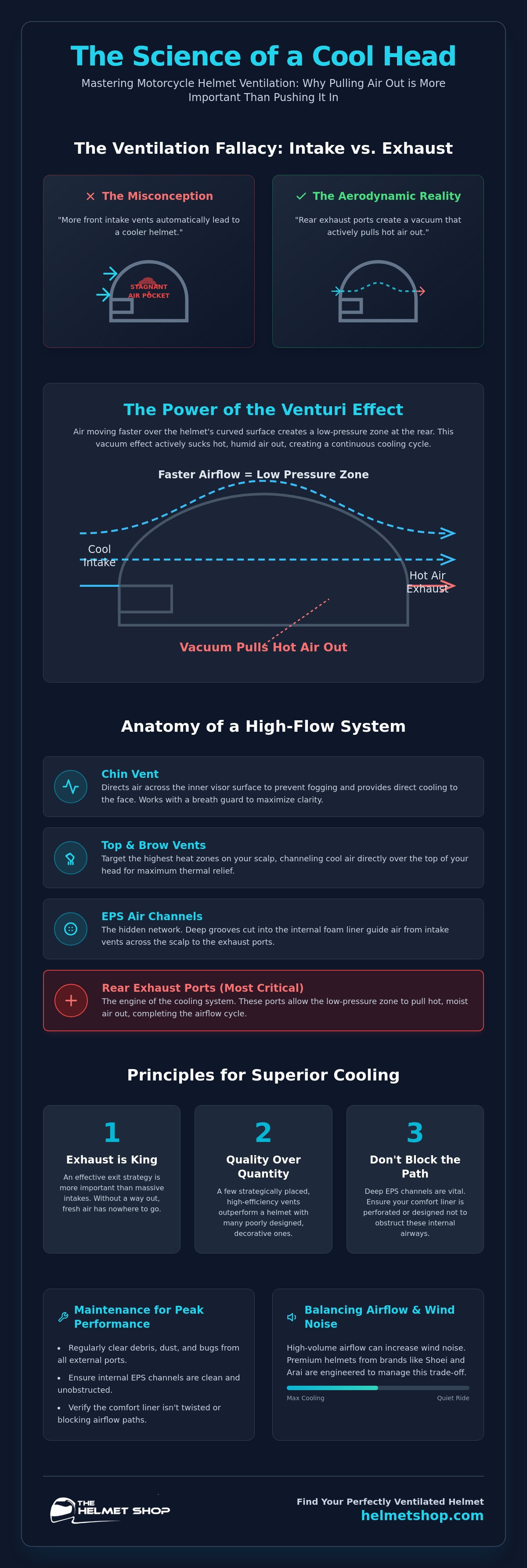
The most effective motorcycle helmet ventilation isn't actually about pushing cold air in; it's about pulling hot, humid air out. While many riders assume that more intake vents automatically mean a cooler head, the real magic happens at the rear exhaust ports. If your current setup leaves you with sweat stinging your eyes or a fogged visor in humid conditions, you're likely dealing with a stagnant air pocket rather than a functional flow-through system.
This fundamental concept of exhausting hot air is just as vital for your home's longevity as it is for your riding comfort. If you are looking for similar expertise in residential airflow and protection, you can check out Thoughtful Roofer Inc. for professional roofing services in the Huntsville area.
It's exhausting to struggle with heat when your gear feels like a portable sauna. We know that finding the perfect balance between high airflow and manageable wind noise is a priority for every rider. This guide promises to help you master the science of helmet cooling so you can maintain maximum comfort during the peak of summer. You'll learn how to identify superior vent designs from premium brands like Shoei and Arai, understand the physics of the Venturi effect, and discover essential maintenance tips to keep your vents performing at their peak.
Key Takeaways
- Understand the physics of the Venturi effect to see why rear exhaust ports are more critical for cooling than front intake vents.
- Compare the design philosophies of Shoei and ARAI to find the motorcycle helmet ventilation system that matches your specific riding style.
- Learn the primary functions of chin, brow, and top vents to manage visor fogging and target the highest heat zones on your head.
- Follow a simple maintenance routine to clear debris from external ports and internal EPS channels for unrestricted airflow.
- Evaluate the trade-off between high-volume airflow and wind noise to select a helmet that balances cooling with long-distance comfort.
The Physics of Airflow: How Motorcycle Helmet Ventilation Works
High-performance motorcycle helmet ventilation is an active engineering feat, not a passive feature. It functions as a dual-stage system involving both intake and exhaust. Most riders focus exclusively on the front vents, but without a way for air to leave, the helmet simply becomes a pressurized pocket of hot, stagnant air. This is why a quality motorcycle helmet must be designed with fluid dynamics in mind to ensure air moves constantly across the rider's skin.
True cooling relies on a pressure differential. When you move at speed, air travels faster over the top and sides of the shell than it does inside. This physical reality creates a vacuum effect at the rear of the helmet. Without a functional exit strategy, the fresh air entering the front has nowhere to go. This leads to "heat soak," a condition where the internal materials and EPS liner absorb and retain your body heat instead of dispersing it.
To better understand this concept, watch this helpful video:
Intake vs. Exhaust: The Vacuum Principle
Exhaust ports are actually more critical for your comfort than intake vents. While air enters through the chin and brow to provide immediate relief, the rear ports do the heavy lifting of long-term temperature regulation. The Venturi effect occurs when air moves faster over the curved surface of the helmet, creating a low-pressure zone that actively pulls hot air out through the rear exhaust ports. This vacuum ensures a constant cycle of fresh air rather than a single blast of wind that quickly warms up and becomes trapped against your head.
The Role of the EPS Liner in Air Distribution
The air doesn't just bounce around inside the shell. It travels through deep air-channeling grooves cut directly into the internal EPS (Expanded Polystyrene) foam layer. These channels act as a network of tunnels that guide cool air from the intake vents directly across the highest heat zones of your scalp. If these channels are shallow or poorly aligned, the airflow stops at the forehead and never reaches the back of the head.
It's also vital to consider the comfort liner. Thick, plush padding can sometimes block these vital EPS grooves. Premium manufacturers ensure their interior padding is perforated or strategically spaced to keep the air paths clear. You can see how this high-level engineering works by exploring Shoei Helmets: Why Premium Protection is a Worthy Investment, as their EPS designs are specifically tuned for maximum thermal management and impact safety.
Don't be fooled by a high vent count. Adding more holes to a shell often increases aerodynamic drag and wind noise without actually improving cooling. A well-designed helmet with three strategically placed, high-efficiency vents often outperforms a budget model with ten poorly placed ones. Efficiency and smart placement are always better than quantity when you're trying to stay cool at highway speeds.
Anatomy of a High-Flow Helmet: Vents and Ports
A high-flow helmet is more than just a shell with holes; it is a network of carefully placed openings designed to manage thermal energy. Identifying these components helps you understand how motorcycle helmet ventilation keeps you alert and focused. While budget helmets might feature decorative plastic pieces that mimic vents, premium designs use functional ports shaped by rigorous testing. Understanding where air enters and exits allows you to adjust your gear for changing weather conditions.
De-fogging and Face Cooling: The Chin Vent
The chin vent is your first line of defense against humidity and heat. Its primary job isn't just to cool your skin; it's engineered to direct a stream of air across the inner surface of the visor. This prevents the warm air from your breath from condensing into fog. Many riders instinctively use a "cracked" visor position for extra air, but a well-designed chin vent and breath guard combination can often provide sufficient clarity without the added wind blast.
A breath guard acts as a physical barrier, forcing exhaled air downward and away from the shield. This ensures that the fresh intake from the chin vent remains focused on clearing your field of view. For those who struggle with visibility while wearing eyewear, checking out the Best Modular Helmets for Glasses Wearers: 2026 Comfort Guide offers specialized advice on managing internal airflow for maximum clarity.
Top Vents and Internal Air Channels
Top and brow vents target the crown of the head, which is the highest heat-retention zone for any rider. These vents are often angled specifically to catch air based on your riding posture. Sport riders in a full tuck need vents positioned further back on the shell, while cruiser riders in an upright position benefit from forward-facing brow intakes. Following NHTSA's guide to choosing a helmet ensures you select a model that balances these comfort features with essential safety certifications.
There is a direct trade-off between large intake ports and wind noise. Larger openings can create turbulence, leading to a loud whistling sound at high speeds. This is why premium brands like HJC utilize proprietary wind tunnels to optimize vent shapes. By refining the edges of these ports, they maximize air intake while minimizing the decibel level inside the shell. If you want to experience this balance of quiet and cool, you can browse our full-face helmet collection to find models with these advanced aerodynamic features.
Rear spoilers and exhaust ports are the silent heroes of helmet stability. By smoothing out the air as it leaves the shell, these components prevent the "buffeting" or head-shaking sensation often felt at highway speeds. They also create the low-pressure zone required to suck heat away from your scalp. Finally, always check the switch gear. High-quality helmets feature glove-friendly sliders or clicks that allow you to adjust your motorcycle helmet ventilation on the fly without needing to pull over.
Premium Brand Innovations: Shoei vs. ARAI Ventilation
Leading manufacturers approach motorcycle helmet ventilation with vastly different engineering philosophies. While the primary goal is always to keep the rider cool, the execution depends on how each brand balances aerodynamics with the strict penetration and impact standards required by the Snell Memorial Foundation. Understanding these brand-specific technologies helps you choose a helmet that fits both your safety needs and your local climate.
HJC Helmets offers a different approach with their Advanced Channeling System (ACS). This technology is frequently found in their racing-oriented models, providing high-value cooling by creating a full front-to-back airflow path. For riders who prefer a more traditional or cruiser-focused look, Daytona Helmets provides lightweight open-face designs. These models prioritize natural airflow, relying on the absence of a chin bar to provide maximum face cooling during low-speed city rides.
Shoei GT-Air and RF-Series Engineering
Shoei utilizes extensive wind-tunnel testing to create a seamless, integrated ventilation system. Their GT-Air II is specifically engineered for touring riders, featuring intake vents positioned to capture maximum air while in an upright riding posture. Shoei's primary focus is maintaining high CFM (Cubic Feet per Minute) airflow without the whistling or roaring noise often associated with high-speed travel. Their designers utilize 3D-shaped cheek pads to assist air exit, ensuring that the internal vacuum remains consistent around the lower rear of the shell.
ARAI Diffuser Systems and Brow Vents
ARAI adheres to the R75 Shape philosophy, which prioritizes a round, smooth, and strong shell to divert impact energy. Because they minimize drilling holes in the main shell structure, they rely on external "pods" and diffusers to manage air. The DF-12 diffuser system, a staple on the Corsair-X and RX-7V models, uses adjustable aero-wings to pull air through the internal channels.
ARAI's unique "brow vents" are another hallmark of their innovation. These vents bypass the shell's structural integrity entirely by feeding air through the visor port and into the forehead area of the EPS liner. This design provides direct cooling to the rider's temples without compromising the strength of the forehead region. To see how these features integrate with their overall safety design, you can explore our ARAI Helmets for Sale: The 2026 Buyer’s Guide to Premium Protection.
Choosing between these brands often comes down to your specific riding environment. Shoei offers a quiet, highly integrated experience perfect for long-distance touring. ARAI provides a modular, race-proven system that allows for fine-tuning based on high-speed aerodynamic needs. Both brands represent the pinnacle of motorcycle helmet ventilation engineering in 2026.
How to Maximize and Maintain Your Helmet’s Ventilation
Even the most advanced motorcycle helmet ventilation system will eventually lose its effectiveness if it isn't properly maintained. Road grime, dried insect remains, and salt buildup from perspiration all act as physical barriers to airflow. Regular upkeep ensures your helmet continues to pull heat away from your scalp as effectively as the day you bought it. Neglecting these small details often leads to a "stuffy" feeling, even when all vents are fully open.
Cleaning Vents and Internal Channels
Insects frequently find their way into intake ports, where they dry and block the narrow air paths. To clear these, start by removing the interior comfort padding to reveal the EPS liner. Use a damp, soft cloth to soften any debris on the external sliders before gently clearing them. For the hard-to-reach internal channels, a soft pipe cleaner or a quick blast of low-pressure compressed air is usually sufficient to dislodge obstructions.
Avoid using harsh chemical cleaners or petroleum-based solvents during this process. These substances can cause the EPS foam to degrade or even melt, which compromises the helmet's safety integrity. Stick to mild soap and warm water for the shell and plastic vent components. If your current gear is beyond a simple cleaning, you can shop our full range of high-ventilation helmets to find a fresh replacement with modern, easy-to-clean port designs.
Summer Riding Gear Synergy
Your helmet doesn't work in isolation. The gear you wear on your body significantly impacts how well your head stays cool. A mesh jacket, such as those from Noru or Cortech, allows air to move freely around your neck and shoulders. This reduces the temperature of the air being "sucked" into the rear vacuum of the helmet, preventing the recirculated air from feeling like a heat gun. You can learn more about coordinating your setup in our Motorcycle Gear Guide: Essential Protection for Every Rider in 2026.
Don't ignore the internal liner. Moisture-wicking liners are designed to pull sweat away from your skin, but they can become "clogged" with salt and oils over time. This buildup prevents the fabric from breathing and leads to the dreaded "helmet funk." Wash your removable liners in a mesh bag on a delicate cycle at least once a month during the summer. For maximum hygiene, consider wearing a thin, synthetic balaclava as a base layer. This acts as a primary sweat barrier, keeping your main helmet liner cleaner and more effective for longer rides, while an inclusive salon like Heavy Metal Hairdresser can help you manage the hair health and styling challenges that come with frequent helmet use.
Choosing the Best Ventilated Helmet at The Helmet Shop
Selecting the right motorcycle helmet ventilation is a personal process that depends on your bike's ergonomics and your typical cruising speed. A helmet that stays ice-cold on a track might feel like a sealed oven on a slow-moving cruiser. We guide riders toward the specific vent configurations that match their unique needs and riding environments. Engineering that works at 80 mph often behaves differently at 30 mph, so your choice must reflect your actual road habits.
Position-Specific Ventilation
Posture dictates airflow efficiency. Sport riders in a full tuck need brow vents that face forward when the head is tilted down. Cruiser riders sitting upright require vents on the crown of the shell to catch the wind effectively. If you mostly ride at lower city speeds, the "Ram Air" effect is less pronounced, making natural airflow more important. For these scenarios, check out Daytona Helmets: The Ultimate Buyer’s Guide to Lightweight Protection for options that prioritize comfort in relaxed riding positions.
Modular helmets like the Shoei Neotec 3 offer some of the most versatile airflow options available in 2026. These helmets allow you to flip up the entire chin bar during stops or slow-speed maneuvers for an immediate blast of fresh air. When closed, they utilize sophisticated internal channeling to maintain a steady breeze without compromising facial protection. This versatility makes modular designs a top choice for touring riders who encounter varying weather conditions in a single day.
Noise vs. Airflow: Finding Your Balance
It's a physical reality that more air usually means more noise. High-airflow race helmets are often louder because the large ports create turbulence at the shell's surface. We recommend high-quality earplugs for any rider prioritizing maximum cooling on the highway. Modern Bluetooth headsets from Sena or Cardo are designed to fit into recessed pockets within the EPS liner. This ensures your communication system doesn't block the very air channels meant to keep you cool, allowing you to stay connected without sacrificing comfort.
Before you make a final decision, perform a physical inspection. Look inside the helmet and ensure you can see clear, unobstructed paths through the EPS foam. You can even perform a "blow test" by directing air into the external intake and feeling for where it exits inside the liner. Visit The Helmet Shop to browse our curated selection of high-airflow Shoei, ARAI, and HJC helmets to find your perfect summer setup. Our experts are ready to help you master your motorcycle helmet ventilation for a cooler, safer ride.
Master Your Ride with Precision Cooling
Mastering your motorcycle helmet ventilation is about more than just opening a few plastic tabs. It requires a fundamental understanding of how pressure differentials pull heat away from your scalp and how regular maintenance keeps those critical EPS channels clear. Whether you prefer the wind-tunnel-tested aerodynamics of Shoei or the race-proven diffuser systems from ARAI, your gear should work as hard as you do to prevent heat exhaustion. You don't have to settle for a stuffy ride when modern engineering offers such precise thermal control.
As an authorized dealer for Shoei, ARAI, and HJC, we provide an expert-curated inventory designed to meet the demands of every riding style. We offer national shipping across the United States to ensure every rider has access to premium protection and comfort. Our team understands the technical details of every model we stock, acting as your reliable guide to the best gear on the market.
Shop Premium High-Airflow Helmets at The Helmet Shop
Gear up with confidence and enjoy the road ahead. We're here to help you stay comfortable no matter how high the mercury climbs.
Frequently Asked Questions
Does more ventilation make a motorcycle helmet less safe?
No, modern ventilation does not compromise safety when the helmet meets current standards like ECE 22.06 or Snell M2025. Engineers design the internal channels within the EPS liner to manage impact energy while allowing air to flow. This ensures you stay cool without sacrificing the structural integrity required to protect your head. Premium brands ensure that every port and channel is tested to maintain maximum protection during a crash.
How do I know if my helmet vents are actually open?
You can confirm your vents are open by checking the position of the external sliders or switches. Most designs move forward or downward to reveal the intake port. If you are still unsure, use a bright light to inspect the internal EPS channels for any visible obstructions. This allows you to see the physical opening of the vent door and ensures there is a clear path for air to enter.
Why is my helmet so noisy when the vents are open?
Increased noise is a direct result of air turbulence entering the intake ports at high speeds. Large vents designed for maximum cooling often create more wind roar than sealed touring models. If you prioritize motorcycle helmet ventilation, wearing high-quality earplugs is the best way to protect your hearing. This allows you to maintain a comfortable internal temperature without the distraction of excessive decibel levels during highway travel.
Can I add more vents to my current motorcycle helmet?
You should never modify your helmet shell by drilling additional holes or cutting into the liner. Any structural change compromises the helmet's ability to protect you and voids all safety ratings. If you find your current gear is too hot, the only safe solution is to upgrade. Purchasing a new helmet specifically designed with a high-performance ventilation system is the only way to stay cool safely.
What is the best type of helmet for hot weather riding?
Modular helmets and high-flow full-face helmets are the most effective options for extreme heat. Modular designs allow for maximum air during stops, while race-spec full-face models use advanced aerodynamics to pull heat away from your head at speed. Choosing a helmet with a moisture-wicking liner also helps manage sweat. These designs ensure that air moves constantly across your scalp to prevent heat exhaustion on long summer tours.
Do brow vents actually do anything on ARAI helmets?
Brow vents on ARAI helmets are highly functional and unique to the brand's safety philosophy. They pull air through the visor port and direct it toward your temples without requiring holes in the critical forehead area of the shell. This provides targeted cooling to high-heat zones while maintaining the maximum strength of the outer shell. It is an efficient way to manage temperature without compromising the helmet's integrity.
How often should I clean the vents on my helmet?
You should clean your vents at least once a month, or more frequently if you ride in areas with high insect activity. Small debris and dried bugs can easily obstruct the narrow intake ports and internal air paths. Keeping these channels clear is essential for maintaining the peak performance of your motorcycle helmet ventilation system. Regular maintenance prevents the "stuffy" feeling that occurs when airflow is restricted by road grime.
Can I wear a balaclava in the summer to help with ventilation?
A thin, synthetic balaclava is a highly effective tool for summer riding. It wicks moisture away from your skin faster than a standard helmet liner, facilitating quicker evaporation in the moving air. Using a base layer also protects your helmet's interior from salt and oil buildup. This keeps the ventilation pores in the fabric from becoming clogged, ensuring your cooling system remains efficient throughout the entire riding season.


