

Choosing an open face helmet is no longer a compromise between vintage style and modern survival. You likely value the unmatched peripheral vision and the classic 3/4 aesthetic that the best open face motorcycle helmets provide. However, finding the safest and most comfortable open face helmet available this year can feel like a challenge. The fear of reduced chin protection or excessive wind noise at highway speeds often makes riders hesitate. It's a valid concern, especially when you're trying to find a shell that fits an intermediate oval head shape without the dreaded "bobblehead" look.
This guide highlights the top-rated models for 2026. We focus on gear that bridges the gap between retro cool and the rigorous new ECE 22.06 safety standards. You'll discover how premium brands like Shoei and Arai are utilizing advanced fiberglass composites and multi-density EPS liners to keep you protected. We'll also explore how modern designs have finally solved the communication struggle, offering seamless integration for your Sena or Cardo systems. From reducing buffeting to maximizing your field of view, this is your definitive roadmap to a safer, more stylish ride.
Summary of Key Insights:
- Visibility and Style: Understand why the 3/4 design remains the premier choice for urban commuters and classic aesthetics.
- Top Rated Brands: Compare the best open face motorcycle helmets from industry leaders like Shoei, Arai, and HJC for 2026.
- Fit and Comfort: Learn how to identify your specific head shape to ensure a secure fit and eliminate highway wind noise.
- Performance Features: Evaluate how shell weight and aerodynamics influence your comfort during long-distance rides.
- Expert Selection: Discover why testing premium liners is essential for finding your perfect match in safety and performance.
This guide helps you navigate the technical details of modern headwear to ensure your gear is as reliable as it is stylish.
Why Choose an Open Face Motorcycle Helmet for 2026?
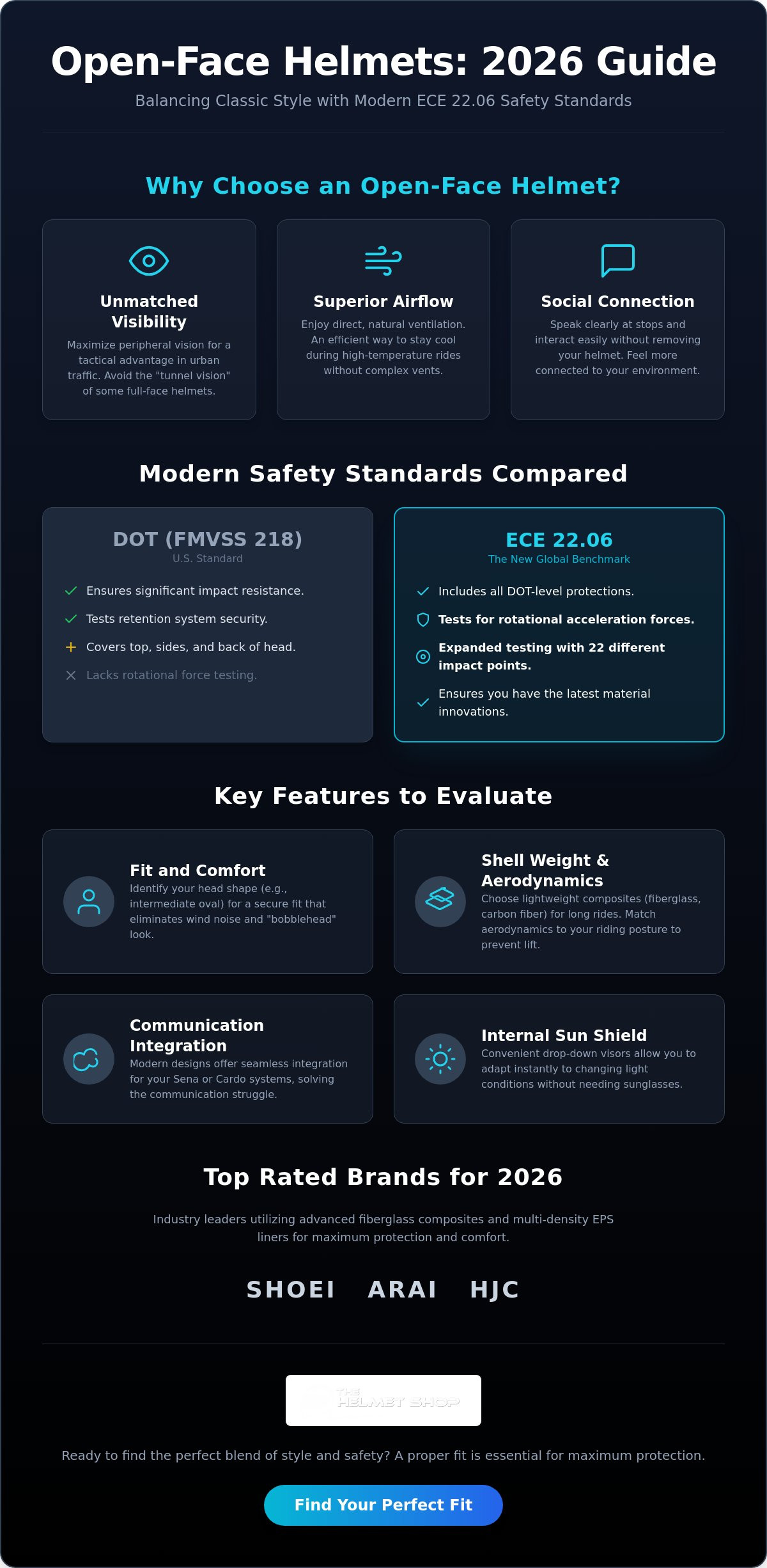
The 3/4 helmet design remains a staple for riders who prioritize freedom and situational awareness. Unlike a half helmet, these models provide essential coverage for the top, sides, and back of your head. They offer a secure, wrapped fit while leaving the face exposed to the air. This specific configuration is why urban commuters and cruiser enthusiasts often seek out the best open face motorcycle helmets. They need to see every car merging and every pedestrian stepping off the curb without the physical restriction of a chin bar.
Ventilation is another primary driver for this style. While full-face helmets rely on complex internal intake ports, an open design offers direct, natural airflow. It's a highly efficient way to stay cool during high-temperature summer rides. There is also a distinct social benefit to this gear. You can speak clearly at stoplights or interact with others at a gas station without struggling to be heard through layers of padding or needing to remove your lid entirely.
To better understand the benefits and features of these designs, watch this helpful video:
Visibility as a Safety Feature
A wider field of view isn't just about enjoying the scenery. It's a tactical advantage in dense urban environments. Standard full-face eye ports can sometimes create a "tunnel vision" effect, limiting your ability to spot lateral hazards like a car pulling out of a side street. An open face design maximizes your peripheral vision. It allows you to identify threats in your blind spots significantly faster than more restrictive shells. Many riders also report a psychological benefit. Feeling more "connected" to the environment reduces the sense of isolation, which can lead to better decision-making when navigating heavy traffic.
Modern Safety Standards: DOT and ECE 22.06
Safety technology has moved far beyond basic foam liners. Every Motorcycle helmet sold for road use in the U.S. must meet DOT (FMVSS 218) standards. This testing ensures the shell can withstand significant impacts and that the retention system stays secure. For 2026, the ECE 22.06 standard has become the global benchmark for safety. This updated regulation includes 22 different impact points and tests for rotational acceleration, which is a leading cause of brain injuries.
Choosing a helmet that meets these updated requirements ensures you're benefiting from the latest material innovations. However, safety isn't just about the sticker on the back. Even the highest-rated lid won't protect you if it doesn't stay on your head during an accident. Consult our motorcycle helmet fit guide to ensure your gear provides the maximum protection possible through a precise, snug fit.
Categorising the Best Open Face Helmets by Riding Style
Not all 3/4 helmets are built for the same road. Your motorcycle choice dictates your posture, which in turn determines how air flows over your shell. The best open face motorcycle helmets are engineered for specific wind profiles. If you ride a cruiser with an upright seat, you need a different aerodynamic profile than someone leaning slightly forward on a modern commuter bike. Choosing the wrong shape can lead to "lifting" at highway speeds, which causes significant neck strain and discomfort.
Weight is another critical variable to consider. A short city hop allows for slightly heavier shells that might include more integrated gadgets. Long-distance touring demands a lightweight carbon fiber or fiberglass composite shell to prevent fatigue over several hours. Modern 3/4 designs have also mastered the internal sun shield. These drop-down visors allow you to adapt to changing light conditions instantly. It's vital to Choose the Right Motorcycle Helmet based on both these performance features and verified safety ratings.
The Retro and Cruiser Aesthetic
This category prioritizes clean, low-profile lines and a vintage silhouette. Premium retro lids often use fiberglass or carbon fiber to achieve a slim look without sacrificing structural integrity. You generally have two choices for eye protection in this style. Many purists prefer pairing the shell with specialized riding goggles for an authentic feel. Others opt for a snap-on bubble shield. This provides a classic 1970s look while offering better wind protection for your entire face during longer rides.
Touring and Commuter Performance
Touring models focus on endurance and utility rather than just aesthetics. These helmets feature integrated, full-length face shields and advanced ventilation ports. Brands like Shoei and Arai lead the industry in noise reduction technology for this segment. They use specialized cheek pads and sculpted shell shapes to minimize the wind "whistle" often associated with open designs. Flip-up internal visors are a standard convenience here. They let you manage glare as you move between shaded canyons and direct sunlight without needing to pull over.
If you're ready to upgrade your ride, you can explore our curated collection of open face helmets to find the perfect match for your specific bike and riding habits.
Top Rated Open Face Helmet Brands and Models
Brand reputation in the motorcycle industry is built on decades of crash data and precision engineering. The manufacturers leading the market invest heavily in proprietary shell materials and extensive wind-tunnel testing. This dedication results in a more stable ride and significantly reduced wind noise. When you're searching for the best open face motorcycle helmets, you'll find that Shoei and Arai dominate the premium segment. Meanwhile, HJC and Daytona provide exceptional value for riders with specific fit or aesthetic requirements.
Before you commit to a particular model, consult the NHTSA guide to choosing a motorcycle helmet. This resource helps you verify that your chosen brand meets federal safety standards while providing the necessary protection for your specific head shape.
Premium Picks: Shoei and Arai
Shoei helmets are widely considered the benchmark for 3/4 helmet performance. Their multi-ply Matrix AIM shells combine organic and glass fibers to create a structure that's both incredibly strong and lightweight. This construction is a primary reason why their open face models remain so quiet at highway speeds. Arai takes a different engineering path with their "R75" shell shape. This design emphasizes a rounder, smoother surface to help the helmet glance off obstacles during an impact rather than catching on them. Both brands offer a high long-term return on investment because their interiors are fully replaceable. You can swap out cheek pads and liners to maintain a factory-fresh fit for years.
High-Value Performance: HJC and Daytona
HJC utilizes advanced CAD technology to design their shells. This focus on digital precision allows them to create a superior fit that accommodates a wide variety of riders. They successfully balance technical features like integrated sun shields with accessible mid-range pricing. Daytona serves a different niche by focusing on the "slimmest" DOT approved shells available. While premium brands often favor composite materials, HJC and Daytona frequently use high-quality polycarbonate. This material is slightly heavier than carbon fiber but offers excellent impact resistance. Choosing between these materials often comes down to your budget and how much you value weight reduction for long-distance comfort.
Key Features to Evaluate Before You Buy
Selecting the right gear requires looking past the paint job. Your head shape is the most critical factor in long-term comfort. Most riders in North America fall into the "Intermediate Oval" category, which is slightly longer front-to-back than side-to-side. If you have a "Round Oval" shape, a standard helmet will cause painful pressure points on your forehead. The best open face motorcycle helmets provide specific internal geometries to match these shapes. A proper fit ensures the helmet stays stable at speed and provides maximum impact protection.
Weight is another non-negotiable factor. While a few ounces might seem trivial in the showroom, they become significant on a four-hour ride. Heavy shells lead to neck fatigue and reduced alertness. Premium composite materials help keep the total weight low without sacrificing structural integrity. You should also prioritize liners with moisture-wicking and anti-bacterial properties. These materials pull sweat away from your skin and prevent the buildup of odors over time. Finally, check the optical clarity of the face shield. A high-quality shield offers UV protection and zero distortion, which is vital for reading road textures and judging distances accurately.
Bluetooth and Communication Ready
Modern riders expect to stay connected. When evaluating a new 3/4 helmet, identify the depth of the speaker pockets. Some shells have shallow cutouts that cause the speakers to press uncomfortably against your ears. Look for models specifically designed for Sena and Cardo systems. Since open face helmets lack a chin bar, you'll need a robust boom microphone. High-quality communication-ready shells often include dedicated channels to tuck away wiring, which prevents snagging and keeps the interior comfortable. Investing in a tech-ready helmet now saves you from the frustration of modifying your liner later.
Ventilation and Airflow Control
Effective cooling isn't just about the number of holes in the shell. It's about how those ports move air. Look for intake vents at the forehead and exhaust ports at the rear. This setup utilizes the "venturi effect," where low pressure at the back of the helmet actively pulls hot air away from your scalp. Before you buy, test the vent sliders. They should be large enough to operate easily while wearing gloves. High-performance models feature multi-stage vents that let you fine-tune the airflow depending on the ambient temperature and your riding speed.
Find the right fit and tech for your next ride by browsing our premium open face helmet inventory today.
Securing the Right Fit at The Helmet Shop
Finding the best open face motorcycle helmets involves more than just looking at a size chart. You need to feel the difference between a standard liner and a premium, hand-fit interior. At The Helmet Shop, we provide access to the industry's most respected names. Trying on a Shoei or an Arai reveals the precision of their engineering. You'll notice how the cheek pads support your jaw without pinching. You'll feel how the weight is distributed evenly across your crown. Our national selection of Shoei, Arai, and HJC ensures that whether you have an intermediate oval or a round oval head shape, you'll find a shell that fits securely.
Our staff acts as a knowledgeable advisor to help you navigate these technical choices. We don't just sell lids; we help you build a cohesive protection system. This includes matching your helmet's airflow with your jacket's venting and ensuring your gloves don't interfere with your communication system controls. This personalized approach is why riders choose us as their reliable guide. We understand that every rider has unique needs, from the daily urban commuter to the weekend touring enthusiast. We take the time to ensure your gear matches your specific riding style.
Completing Your Gear Setup
A high-quality helmet is the foundation of your safety, but it's only one part of the equation. We recommend matching your new open face lid with protective jackets and gloves from trusted brands like Tourmaster, Cortech, or Noru. For a full safety breakdown, reference our motorcycle gear guide. We focus on brand-name reliability because we know that premium equipment performs better in real-world conditions. A coordinated setup ensures you're protected from head to toe without sacrificing mobility or comfort.
Why Riders Trust The Helmet Shop
We are committed to stocking the latest 2026 inventory, including models that meet the rigorous ECE 22.06 safety standards. Our national reach allows us to offer a massive selection while maintaining the personalized expertise of a specialized gear boutique. Before you make your final choice, use this quick checklist:
- Check for the DOT or ECE 22.06 sticker on the rear shell.
- Ensure there are no pressure points on your forehead or temples.
- Verify the shield operates smoothly with one hand.
- Confirm the speaker pockets align with your ears.
Browse our full collection of open face helmets today.
Elevate Your 2026 Riding Experience
Selecting your next 3/4 shell is a decision that balances personal style with rigorous technical standards. You now have the tools to distinguish between different head shapes and understand how the latest ECE 22.06 regulations provide superior impact protection. Transitioning to a high-performance lid improves your peripheral vision and ensures you stay cool during the most demanding summer rides. The best open face motorcycle helmets available today prove that you don't have to sacrifice safety for the classic look you love.
At The Helmet Shop, we act as your reliable guide to premium headwear. We are an authorized dealer for Shoei and ARAI, maintaining an extensive inventory of DOT and ECE 22.06 approved helmets. Our staff provides expert support for Bluetooth headset integration to ensure your communication system fits perfectly within your new shell. Explore the Best Open Face Helmets of 2026 at The Helmet Shop and find the perfect match for your riding style. We look forward to helping you secure a safer and more comfortable journey on the open road.
Frequently Asked Questions
Are open face helmets safe for highway riding?
Open face helmets are safe for highway use as long as they carry a DOT or ECE 22.06 certification. These standards ensure the shell and liner can handle significant impact energy. While they don't protect the chin, their increased peripheral vision helps you spot hazards earlier. We recommend choosing a model with a full-length face shield to protect against wind blast and road debris at higher speeds.
How should an open face helmet fit compared to a full-face?
An open face helmet should fit snugly around your crown and cheeks without creating painful pressure points. It should feel firm and not move when you shake your head. Because these helmets lack a chin bar, they often feel less restrictive than full-face models. However, the fit must be precise to prevent the wind from catching the interior and lifting the shell while you ride.
Can I install a Bluetooth headset in an open face helmet?
Yes, you can easily install communication systems in most modern 3/4 designs. Many of the best open face motorcycle helmets feature dedicated speaker cutouts and internal channels to hide wiring. Since there is no chin bar to mount a standard microphone, you will need to use a boom microphone. Brands like Sena and Cardo offer specific kits designed to work perfectly with open face shells.
What is the quietest open face motorcycle helmet?
Premium models from Shoei and Arai are widely considered the quietest options in this category. These manufacturers use wind-tunnel testing to sculpt shell shapes that minimize turbulence. Features like aerodynamic cheek pads and a tight neck seal help block air from rushing up into the helmet. Using a full-length outer shield also significantly reduces the whistling and buffeting often found in more basic retro designs.
Do open face helmets come with sun shields?
Many modern touring and commuter models include integrated, drop-down internal sun visors. These visors allow you to adapt to changing light conditions instantly using a slider on the side of the shell. While these are common in performance-oriented 3/4 helmets, many retro-style lids omit them to maintain a slim, low-profile look. In those cases, riders typically rely on sunglasses or snap-on bubble shields to manage glare.
How often should I replace my open face helmet?
Industry standards recommend replacing your helmet every five years of use or seven years from the date of manufacture. The protective EPS liner inside the shell naturally degrades over time and becomes less effective at absorbing impacts. You must also replace your helmet immediately if it's involved in a crash or dropped onto a hard surface. Even if the shell looks fine, the internal structure may be compromised.
What is the difference between a 3/4 helmet and a half helmet?
A 3/4 helmet provides coverage for the top, sides, and back of your head, while a half helmet only covers the top. This additional coverage makes the 3/4 design much safer as it protects the ears and the base of the skull. The extended sides also provide a more stable platform for mounting face shields and internal speakers. Most riders find 3/4 helmets much more comfortable for longer trips.
Are all open face helmets DOT approved?
No, not all helmets sold online meet federal safety requirements. You should always look for the DOT sticker on the back of the shell to confirm it meets FMVSS 218 standards. Some "novelty" helmets are designed to look like 3/4 shells but lack the necessary impact-absorbing liners. Choosing the best open face motorcycle helmets from reputable brands ensures you are getting a piece of equipment that is legally compliant and safety-tested.


